
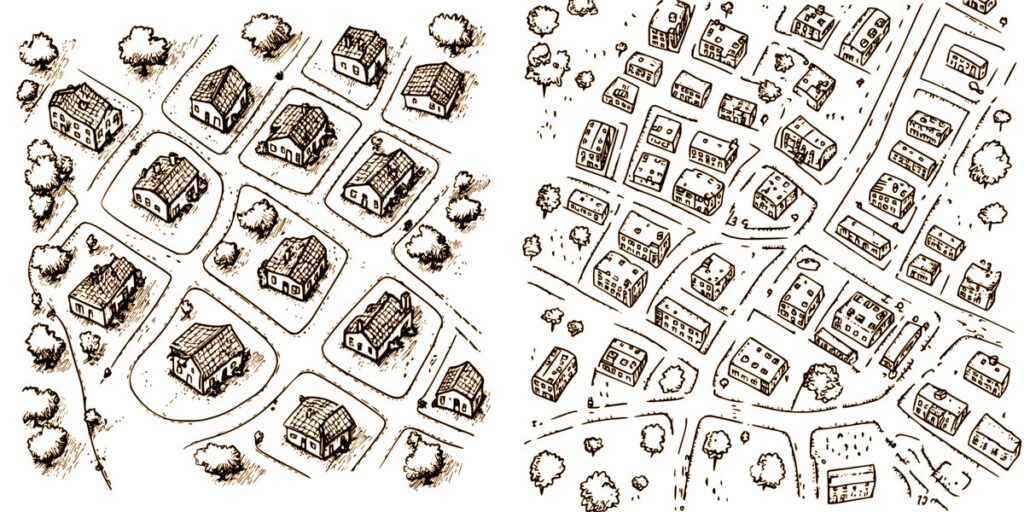
A Neighborhood Shaped by Tyler’s Growth
The Meadows is the kind of Tyler neighborhood that can feel familiar even to someone visiting for the first time. Its residential streets, established yards, and easy connection to the rest of the city reflect a broader Tyler tradition: neighborhoods that grow gradually, absorb new generations, and retain a strong sense of place.
Unlike Tyler’s formally recognized historic districts, The Meadows is best understood as a residential subdivision shaped by the city’s suburban growth. Its story is not centered on one famous mansion or a single dramatic event. Instead, its heritage lives in the everyday details—tree-lined streets, longtime homeowners, changing house styles, and the steady connection between private homes and the larger Tyler community.
Tyler itself was established as the Smith County seat in 1846 and named for President John Tyler. From the beginning, the city developed around a central courthouse square, with residential areas gradually spreading outward as the population increased. ([cityoftyler.org](https://www.cityoftyler.org/Parks-Community/About-Tyler/Tyler-History?utm_source=openai))
Where the Name “The Meadows” Comes From
The name *The Meadows* reflects a familiar East Texas landscape. Before modern subdivisions covered the outskirts of Tyler, much of the area surrounding the city consisted of open pastureland, fields, timber, and small agricultural properties. A name such as The Meadows would have suggested open green space, gently rolling land, and a peaceful setting away from the commercial center.
Available public records do not identify a single individual as the namesake of The Meadows, nor do they point to a civic naming ceremony comparable to the naming of Tyler itself. That is common for postwar and late-twentieth-century subdivisions. Developers often chose names that conveyed comfort, nature, and family life. “The Meadows” likely served that purpose: it promised a residential setting that felt spacious and calm while remaining close to Tyler’s schools, medical facilities, shopping, and churches.
The name also fits the language of East Texas development. Across the region, subdivisions have borrowed names from natural features—meadows, woods, springs, creeks, and ridges—to connect new neighborhoods with the landscape that came before them.
From Fields and Farms to Family Homes
The Meadows emerged during the era when Tyler began expanding beyond its older central neighborhoods. Earlier residential growth had followed routes such as Broadway Avenue, South Palace Avenue, and Glenwood Boulevard. Historic surveys of Tyler describe a city where farms and substantial homes outside the original town plat were gradually incorporated into the growing urban area. Over time, those open parcels were divided into additions and subdivisions. ([atlas.thc.texas.gov](https://atlas.thc.texas.gov/NR/pdfs/64500654/64500654.pdf?utm_source=openai))
That pattern helps explain The Meadows. Land that may once have supported pasture, gardens, or small-scale agricultural activity became part of Tyler’s expanding residential fabric. Streets were laid out, utilities extended, lots were sold, and houses appeared in phases rather than all at once.
The neighborhood’s early years were probably marked by the familiar sights of suburban construction: newly graded streets, young trees, freshly planted lawns, and families moving into homes that represented stability and progress. As Tyler grew, The Meadows benefited from the city’s expanding network of roads, schools, churches, and businesses.
Important Tyler Milestones Around the Neighborhood
Although The Meadows does not have a collection of nationally recognized historic buildings within its boundaries, its history is closely connected to several major chapters in Tyler’s development.
- The arrival of rail service in the late nineteenth century helped Tyler grow from a county-seat town into a regional center.
- The city’s rose industry became nationally known, leading to the Texas Rose Festival, first held in 1933.
- Mid-century growth brought new schools, shopping centers, medical facilities, and residential neighborhoods.
- The development of Loop 323 and later Loop 49 made it easier for residents to travel between Tyler’s older core and newer suburban areas.
Tyler’s identity as the “Rose Capital of America” remains especially important. The Tyler Municipal Rose Garden, one of the city’s best-known landmarks, represents the horticultural tradition that shaped local pride and tourism. The annual Texas Rose Festival continues to connect modern Tyler with the agricultural and civic history of earlier generations. ([cityoftyler.org](https://www.cityoftyler.org/Parks-Community/About-Tyler/Tyler-History?utm_source=openai))
For residents of The Meadows, these landmarks are more than attractions. They form part of the everyday cultural landscape—places for family outings, school programs, photographs, festivals, and visits from relatives.
Streets, Parks, and Nearby Institutions
The character of The Meadows is expressed more through its residential streets than through monumental architecture. Quiet internal roads, driveways, front lawns, and mature landscaping create the neighborhood’s visual identity. Over the decades, homeowners have added porches, gardens, fences, shade trees, and renovations that give individual houses a personal history.
The neighborhood also benefits from Tyler’s collection of parks and public spaces. Nearby destinations such as Bergfeld Park, the Tyler Municipal Rose Garden, and the city’s network of walking and recreational areas offer residents places to gather outside their own yards. Bergfeld Park, in particular, has long served as one of Tyler’s important community gathering places, with green space and facilities that support concerts, festivals, and family activities.
The Meadows is also part of a citywide institutional network that includes Tyler Independent School District campuses, churches, medical centers, libraries, and local businesses. These institutions often become the landmarks residents remember most clearly. A school where several generations attended classes, a church where families marked weddings and funerals, or a nearby store that served as a regular meeting place can be just as meaningful as an officially designated historic site.
How The Meadows Has Changed
Like many Tyler neighborhoods, The Meadows has evolved in quiet but noticeable ways. The earliest homes have aged into established residences, and some have been remodeled or expanded. Original landscaping has matured, creating shade and privacy that were not present when the subdivision was new. At the same time, some properties have changed ownership as longtime residents moved, retired, or passed homes to younger family members.
The neighborhood has likely experienced the familiar cycle of suburban change: children who once played in the streets grew up, families moved away, and new residents arrived. Yet the basic appeal of The Meadows remains consistent. It offers a residential setting without being isolated from the larger city.
Modern Tyler has also brought new traffic patterns, retail development, medical expansion, and changing housing preferences. Those changes may alter how residents reach The Meadows, but they do not erase its older identity. In many ways, the neighborhood’s heritage is strongest in its continuity—the way familiar streets remain recognizable even as houses, families, and landscaping change.
What Makes The Meadows Special
The lasting appeal of The Meadows is its blend of ordinary life and local history. It is not a museum neighborhood, and its story is not preserved in a single plaque. Instead, heritage appears in the layers of daily living: the homes built during Tyler’s outward growth, the trees planted by earlier residents, the sidewalks and streets remembered by generations of children, and the community institutions that connect the neighborhood to the rest of the city.
For longtime residents, The Meadows may be remembered through small moments—a neighbor waving from a porch, the sound of lawn equipment on a Saturday morning, children heading to school, or the sight of roses blooming after a spring rain. Those details are part of Tyler’s history, too.
The Meadows stands as a reminder that a neighborhood’s importance does not depend solely on age or architectural fame. Its heritage comes from the people who built lives there, cared for their homes, welcomed newcomers, and carried the character of one Tyler generation into the next.